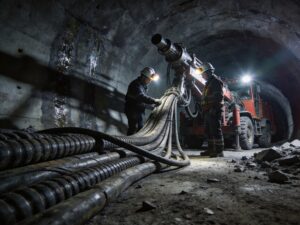
Why Manufacturer Selection Matters
Cable infrastructure represents a long-term investment, with installations expected to perform reliably for 25-50 years depending on application. The consequences of cable failure extend far beyond the cost of replacement cable—power interruptions, equipment damage, safety hazards, and reputational harm all follow from quality shortfalls. Selecting the right cable manufacturer protects project investments while ensuring system reliability throughout the installation’s service life.
International projects face additional complexity. Products must meet destination country standards while maintaining consistent quality across potentially thousands of kilometers of cable. Communication across time zones and languages creates coordination challenges. Logistical complexity increases when shipping heavy, bulky cable products across borders. A capable manufacturer provides valuable support navigating these international project challenges.
The cable manufacturing industry includes hundreds of producers ranging from small regional shops to multinational corporations. Quality and capability vary enormously across this range. Systematic evaluation of manufacturer capabilities helps buyers identify partners capable of meeting project requirements while avoiding suppliers whose limitations create project risk.
Certification Requirements and Verification
Quality Management Systems
ISO 9001 certification demonstrates that a manufacturer operates a documented quality management system with defined processes, regular audits, and continuous improvement practices. While ISO 9001 alone does not guarantee product quality, it establishes a framework for consistent manufacturing practices. Look for manufacturers with long-standing ISO 9001 registration—recent certifications may indicate limited operational history.
Product Certifications
Product certifications from recognized testing laboratories verify that specific cable products meet established performance standards. Unlike system certifications that examine manufacturing processes, product certifications test actual cable samples against standard requirements.
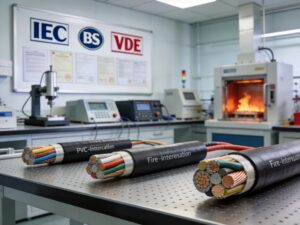
IEC certification through member body test reports confirms compliance with international standards. BS, VDE, and UL certifications address specific regional markets. CCC certification (China Compulsory Certification) is mandatory for products sold in China and demonstrates baseline quality for Chinese manufacturers.
Third-party certifications from independent laboratories—including those recognized for hazardous location certifications like ATEX and IECEx—provide additional confidence in manufacturer claims. Verify that certifications cover the specific products and voltage ratings your project requires.
Mining and Hazardous Location Certifications
Projects in mining or explosive atmosphere applications require manufacturer certifications specific to those environments. MA certification (coal mine safety certification) is mandatory for cables used in Chinese underground coal mines. ATEX and IECEx certifications address European and international explosive atmosphere requirements.
These specialized certifications require additional manufacturing controls and testing beyond standard product evaluation. Manufacturers lacking hazardous location certifications cannot supply cables for regulated applications in these environments.
Manufacturing Capabilities Assessment
Production Capacity
Evaluate whether manufacturer production capacity matches project requirements in terms of volume, lead times, and technical specifications. A manufacturer stretched to capacity may sacrifice quality for throughput or miss delivery schedules. Understanding current production utilization helps assess this risk.
Ask about maximum single-order capacity, standard lead times for various product types, and ability to accelerate production when required. Manufacturers with flexible production capabilities adapt more easily to changing project requirements.
Equipment and Technology
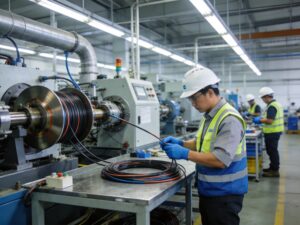
Modern cable manufacturing requires substantial capital equipment investment. State-of-the-art extrusion lines, stranding machines, and testing equipment represent significant financial commitments. Evaluate whether manufacturers maintain current technology or rely on aging equipment that may limit quality or product range.
Advanced testing equipment indicates commitment to quality verification. High-voltage testing sets, partial discharge measurement systems, and continuous length testing demonstrate manufacturing investment. Ask about testing procedures and whether 100% testing or batch testing applies to your products.
Technical Expertise
Experienced cable manufacturers employ engineers and technicians who understand cable technology deeply. This expertise translates to better specification interpretation, appropriate product recommendations, and technical support throughout project execution.
Ask about technical staff qualifications, industry experience, and involvement in standards development. Manufacturers contributing to standards committees demonstrate industry engagement and technical leadership.
Quality Assurance Practices
Incoming Material Verification
Quality cables begin with quality raw materials. Reputable manufacturers verify incoming material properties before incorporating them into production. Copper and aluminum conductors, insulation compounds, and jacketing materials all require incoming inspection to ensure specification compliance.
Process Controls
Manufacturing processes must maintain consistent quality throughout production runs. Statistical process control, in-process testing, and equipment calibration programs prevent quality drift. Ask manufacturers to describe their process control approaches and how they detect and correct deviations.
Finished Product Testing
Every length of cable should undergo testing appropriate to its voltage class and application. Standard tests include conductor resistance measurement, insulation resistance testing, high-voltage withstand testing, and dimensional verification. For higher voltage cables, partial discharge testing provides sensitive detection of insulation defects.
Request testing documentation for your specific order, including test certificates showing actual measured values rather than simply “passed.” Original test certificates provide traceability to specific production runs and materials.
Financial Stability and Business Continuity
Cable manufacturing requires substantial working capital for raw material inventory and accounts receivable. A manufacturer experiencing financial difficulty may cut corners on materials, reduce testing, or ultimately fail to deliver ordered products.
Review publicly available financial information for larger manufacturers. For private companies, ask about financial performance and banking relationships. Established manufacturers with diversified customer bases present lower business continuity risk than those dependent on few large orders.
Long-term industry presence indicates business stability. Manufacturers with decades of continuous operation have survived multiple industry cycles and economic downturns. New market entrants may offer attractive pricing but carry unknown operational risks.
Communication and Project Support
International projects require clear communication across languages, time zones, and cultural differences. Evaluate manufacturer responsiveness during the initial inquiry and quotation phases—early communication patterns often predict ongoing relationship quality.
Dedicated export teams indicate manufacturer commitment to international business. Team members who understand export documentation, logistics requirements, and international commercial terms provide valuable project support. Manufacturers treating export as an afterthought create unnecessary coordination challenges.
Technical support availability matters throughout project execution. Questions arise during specification review, manufacturing, shipping, and installation. Manufacturers offering responsive technical support help resolve issues before they become project problems.
Red Flags and Warning Signs
Several indicators suggest caution when evaluating cable manufacturers:
Unusually low pricing often reflects material or manufacturing shortcuts that compromise quality. If a quotation seems significantly below market rates, investigate why. Quality sacrifices that reduce immediate cost create long-term reliability problems.
Limited certification or testing documentation may indicate that products have not been independently verified. Reputable manufacturers readily provide certification copies and test data.
Reluctance to provide factory visits or reference installations suggests potential concerns about actual manufacturing capabilities. Legitimate manufacturers welcome qualified visitors and can provide relevant project references.
Inconsistent communication, missed commitments, or unclear organizational structure may indicate management instability. Complex international projects require reliable organizational partners.
Conclusion
Selecting a cable manufacturer requires systematic evaluation of multiple factors: certifications and compliance, manufacturing capabilities, quality practices, financial stability, and communication effectiveness. Thorough evaluation protects project investments while establishing relationships that serve future needs.
Building relationships with capable manufacturers provides long-term value beyond individual project execution. Experienced partners understand your requirements, anticipate needs, and deliver consistent quality over multiple orders.
Jinyi Cable Co., Ltd. maintains comprehensive certifications including CCC, ISO 9001, and mining safety certifications. With manufacturing facilities spanning 40,000 square meters and 320 dedicated employees, we support international buyers with quality cables and responsive technical service.