The Demanding Environment of Mining Operations
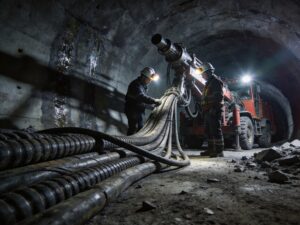
Mining presents perhaps the most challenging environment for electrical cable systems. Underground operations combine confined spaces, high humidity, abrasive dust, chemical exposure, and extreme mechanical stress. Surface mining introduces additional challenges including UV radiation, temperature extremes, and mobile equipment operation. Cable failures in mining applications create not only production interruptions but potentially life-threatening safety hazards.
The consequences of cable failure in mining extend beyond lost production. Electrical faults can ignite flammable methane gas or coal dust, causing catastrophic explosions. Mechanical damage can create shock hazards for workers in confined spaces. Water ingress can energize surrounding rock and metal structures, creating electrocution risks. These severe consequences drive demanding requirements for mining cable quality and performance.
Modern mining operations depend heavily on electrical systems for ventilation, pumping, communication, and equipment operation. The transition from diesel equipment to electric machinery increases electrical dependence while reducing some hazardous emissions. Maintaining reliable power distribution through appropriate cable selection becomes increasingly critical as electrical systems expand.
International Safety Standards for Mining Cables
Multiple international standards govern mining cable construction and testing, reflecting the serious hazards present in mining environments. Understanding these standards helps procurement teams specify appropriate products for specific mining applications and geographic markets.
IEC 60502 standardizes power cables for rated voltages up to 30kV, providing baseline construction requirements applicable to many mining power distribution applications. However, mining applications often require additional performance characteristics beyond standard IEC specifications.
The European ATEX directive (2014/34/EU) governs equipment for explosive atmospheres, including cables used in potentially gassy underground mines. Cables bearing ATEX certification have been evaluated for explosion risk and approved for use in hazardous locations where methane or other flammable gases may accumulate.
IECEx (International Electrotechnical Commission System for Certification to Standards Relating to Equipment for Use in Explosive Atmospheres) provides international recognition for explosion protection equipment, enabling single certification to satisfy multiple national requirements. Mining cables with IECEx certification meet internationally recognized explosion protection criteria.
National standards often supplement international frameworks. Australian standards AS/NZS 2802 specify mining cable requirements for that market, while South African SANS standards address local mining conditions. China’s mining safety regulations require MA certification (coal mine safety certification) for cables used in underground coal mining.
Essential Cable Types for Mining Applications
Power cables for mining equipment must withstand continuous flexing as mobile equipment operates. Trailing cables—the flexible cables supplying power to continuous miners, shuttle cars, and other mobile equipment—experience thousands of flex cycles daily, requiring specially designed flexible conductors and robust jacket materials.
Conveyor systems throughout mines require cables designed for continuous movement and exposure to abrasive materials. Cable carriers, festoon systems, and drag chains impose mechanical demands that standard cables cannot withstand. Mining cable manufacturers offer specialized constructions for each application type.
Underground distribution cables supply power to substations, ventilation fans, pump stations, and communication equipment. These stationary cables must resist moisture, chemical exposure, and mechanical damage from rock movement and equipment traffic. Armored constructions with enhanced jackets provide necessary protection.
Control and instrumentation cables interconnect mining equipment, monitoring systems, and control centers. These cables carry lower voltages but must maintain signal integrity despite electrical noise from heavy mining equipment. Shielded constructions protect sensitive signals from electromagnetic interference.
Specialized Features for Mining Environments
Flame retardancy requirements for mining cables exceed those for standard applications. Underground mines present extreme fire risks from methane ignition and coal dust explosion. Cables must resist flame propagation and prevent fire spread through cable galleries and tray systems.
Oil resistance proves essential for cables near mobile equipment, hydraulic systems, and lubrication points. Conventional cable jackets deteriorate rapidly when exposed to petroleum-based oils, creating insulation failures. Oil-resistant compounds maintain integrity despite continuous exposure.
Mechanical protection through steel wire or tape armor defends against impact, crushing, and abrasion damage. Underground rib support, rock falls, and equipment movement create constant mechanical threats. Armor constructions absorb impact energy and prevent penetration damage.
Ground monitoring conductors in mining power cables enable ground fault detection systems to identify insulation failures before dangerous touch potentials develop. These integrated ground conductors form essential components of mining electrical safety systems.
Selection Criteria for Mining Cable Procurement
Voltage and Current Requirements
Matching cable ratings to system specifications begins the selection process. Most underground mining equipment operates at 1,000V or 1,140V nominal, requiring cables rated for these voltage classes. Higher voltage distribution systems may require medium-voltage cables up to 35kV for long feeder circuits.
Ampacity calculations for mining cables must account for unique installation conditions. Cables often operate in air at elevated temperatures, bundled with other cables, or installed in conduit with limited heat dissipation. Derating factors specific to mining installations ensure adequate conductor sizing.
Environmental Exposure Assessment
Temperature conditions vary significantly between mining environments. Underground temperatures may exceed 40°C in deep mines, while surface operations experience regional climate extremes. Cable temperature ratings must exceed maximum expected operating temperatures with adequate safety margin.
Moisture exposure in underground mines approaches continuous saturation. Water dripping from mine roofs, groundwater infiltration, and intentional dust suppression create perpetually damp conditions. Cable constructions must resist moisture absorption and prevent water treeing in cross-linked polyethylene insulations.
Chemical exposure varies by mining method and ore type. Acidic mine water in some sulfide ore deposits attacks conventional materials, requiring specialized chemical-resistant constructions. Identifying specific chemical exposures enables appropriate material selection.
Certification and Verification
Third-party certification provides independent verification that cables meet specified performance criteria. Mining operators should verify certification validity and scope, as certifications sometimes cover only specific cable types or voltage ratings within a manufacturer’s range.
Factory Mutual (FM) approval provides certification recognized particularly in North American markets, while international mining operations may require IECEx, ATEX, or regional certifications. Specifying certified products simplifies acceptance inspection and regulatory compliance verification.
Supplier capability assessment extends beyond product certification to evaluate manufacturing consistency, quality management systems, and technical support capacity. Suppliers with established mining cable experience understand application requirements and can provide valuable technical assistance during specification development.
Conclusion
Mining cable selection requires careful attention to severe operating conditions, stringent safety requirements, and diverse application demands. The serious consequences of cable failure in mining environments justify thorough evaluation of cable construction, certification, and supplier capabilities.
Specifying cables meeting recognized international standards ensures performance verification and regulatory compliance. Working with manufacturers experienced in mining applications provides access to specialized expertise and proven product designs.
Jinyi Cable Co., Ltd. manufactures mining cable products with MA certification for coal mine applications. Our engineering team supports global mining projects with technical consultation and certified cable