The Challenge of High-Rise Electrical Distribution
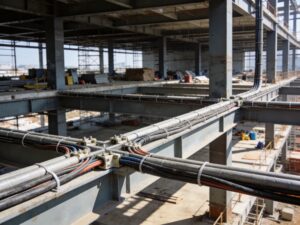
High-rise buildings present unique electrical distribution challenges. Vertical electrical risers must deliver power to hundreds—even thousands—of individual load points distributed across dozens of floors. Traditional installation methods route main feeders up through riser shafts, then branch connections at each floor through junction boxes, conduit, and individual branch circuits. This approach creates complexity, occupies substantial space, and generates numerous connection points where reliability problems develop.
Each connection point in an electrical system represents a potential failure location. Loose connections heat up, oxidize, and eventually fail. Water infiltration damages terminations. Vibration and building movement stress mechanical connections over time. A 40-story building with traditional branch distribution may contain thousands of connection points between the main switchgear and final circuit breakers—a vast accumulation of failure risk.
Installation labor for traditional distribution methods follows the building’s floor-by-floor construction. Electricians spend substantial time installing conduit, pulling wire, and making connections at each level. This sequential work extends electrical installation timelines, often becoming a critical path item delaying overall project completion.
Space requirements for traditional distribution systems include vertical shafts for conduit and cable runs, horizontal ceiling cavities for branch circuits, and dedicated space for floor-by-floor junction boxes. In premium commercial buildings where space translates directly to rentable square footage, this distribution infrastructure represents significant opportunity cost.
Understanding Pre-Branch Cable Technology
Pre-branch cables—also called factory-assembled branch cables or tap cables—address these challenges through pre-fabricated construction. Main conductors run continuously through the cable with factory-installed tap conductors branching at predetermined positions along the length. Each tap emerges from the main cable through a factory-molded junction, creating a permanent, sealed branch point engineered for reliable long-term performance.
The manufacturing process ensures consistent quality at every branch point. Factory-controlled environmental conditions, standardized assembly procedures, and automated testing verify performance at every junction. This contrasts sharply with field-assembled connections where workmanship variation, weather conditions, and time pressure influence quality.
Main conductor sizes typically range from 50mm² to 400mm², providing substantial capacity for major building loads. Tap conductors commonly range from 6mm² to 35mm², suitable for panel board connections, lighting circuits, and small mechanical equipment. Custom configurations accommodate specific project load requirements.
Branch spacing matches building floor heights plus appropriate slack for termination. Standard spacing of 3-4 meters accommodates typical office building floor-to-floor dimensions, though custom spacing serves buildings with unusual configurations.
Benefits for Building Projects
Installation Time Reduction
Pre-branch cables dramatically compress electrical installation schedules. Rather than sequential floor-by-floor work, installers can quickly lay pre-branch cables in vertical shafts, connecting multiple floors simultaneously. Branch connections are already complete—installers simply terminate tap conductors at floor distribution panels.
Projects routinely achieve 30-50% reductions in electrical installation time through pre-branch cable adoption. For high-rise buildings where months of construction schedule translate directly to development returns, this acceleration provides substantial economic value beyond material cost considerations.
Reliability Improvement
The elimination of field-made connections significantly improves long-term reliability. Factory terminations undergo automated testing including high-voltage withstand and pull-out force verification. Molded junctions provide permanent environmental sealing that field terminations cannot match.
Statistical data from building operations consistently shows lower maintenance requirements for pre-branch distribution compared to conventional systems. Fewer connection points mean fewer potential failure locations. Buildings using pre-branch cables report reduced callback rates and improved tenant satisfaction with electrical system reliability.
Space Efficiency
Pre-branch cables occupy less space than equivalent conventional distribution systems. The compact, factory-assembled construction eliminates the need for junction boxes, multiple conduit runs, and the clearances required for field assembly and maintenance access.
This space efficiency translates directly to improved building economics. Smaller riser shafts increase usable floor area. Reduced ceiling cavity requirements enable lower floor-to-floor heights while maintaining adequate space for other building systems. Some projects achieve additional floors within the same overall building height.
Cost Optimization
While pre-branch cable material costs exceed equivalent conventional cable costs, total installed costs typically favor pre-branch systems. Labor savings from reduced installation time, combined with lower maintenance costs and improved reliability, create compelling lifecycle cost advantages.
Material cost comparisons must consider the complete distribution system. Pre-branch cables replace main feeders, branch conduits, junction boxes, and associated hardware. A complete cost analysis comparing equivalent distribution capacity reveals pre-branch advantages in most high-rise applications.
Application Considerations
Building Types
Pre-branch cables suit high-rise buildings with repetitive floor layouts and consistent electrical distribution patterns. Office buildings, hotels, hospitals, and residential towers typically show strong pre-branch economics due to regular floor layouts and consistent power requirements across multiple levels.
Retail buildings, warehouses, and irregular structures may show reduced pre-branch benefits due to varied floor configurations and inconsistent load patterns. Each project warrants evaluation based on specific distribution requirements.
Load Characteristics
Pre-branch distribution works best when branch loads follow predictable patterns. Panel board capacities within a consistent range, similar circuit requirements across floors, and load densities that allow standardized tap sizing maximize pre-branch efficiency.
Projects with highly variable floor loads, unusual load concentrations, or specialized equipment requiring dedicated circuits may need hybrid approaches combining pre-branch distribution for standard loads with conventional methods for exceptional requirements.
Voltage Class
Pre-branch cables are commonly available for low-voltage applications up to 1,000V. This covers the majority of commercial and residential building distribution requirements. Medium-voltage applications above 1,000V require special consideration and may not suit standard pre-branch constructions.
Fire Safety Requirements
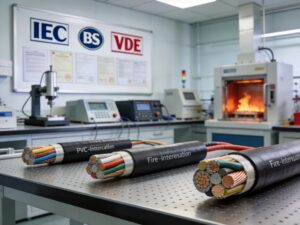
High-rise buildings typically require fire-resistant cable construction for critical distribution paths. Pre-branch cables with fire-resistant ratings—tested to maintain circuit integrity during fire exposure—address these requirements. Specify fire-resistant ratings matching building code requirements for vertical riser applications.
Design and Specification Guidelines
Load Calculation
Begin pre-branch design with detailed load calculations for each floor and the complete building. Determine total connected load, demand factors, and diversity considerations to properly size main conductors and verify adequate capacity for anticipated and future loads.
Tap Sizing
Match tap conductor sizes to expected branch circuit requirements. Standard tap sizes simplify procurement and installation, though custom tap configurations serve unusual load patterns. Include appropriate spare tap capacity for future flexibility.
Length Coordination
Coordinate cable lengths with building dimensions and termination requirements. Account for vertical slack at terminations, horizontal runs to distribution panels, and connections at main switchgear. Over-length introduces installation difficulty; under-length creates termination problems.
Documentation
Clear labeling and documentation simplify installation and future maintenance. Each branch point should be clearly marked with floor identification and circuit information. As-built documentation should accurately reflect actual routing and branch positions.
Conclusion
Pre-branch cables represent proven technology that addresses fundamental challenges in high-rise electrical distribution. The combination of installation time reduction, reliability improvement, space efficiency, and lifecycle cost advantages makes pre-branch cables increasingly standard for buildings above 8-10 floors.
Early design-stage evaluation enables optimal pre-branch system specification and coordination with other building systems. Working with experienced manufacturers during design helps identify configuration options and specification requirements.
Jinyi Cable Co., Ltd. manufactures factory-assembled pre-branch cables for vertical electrical distribution in high-rise buildings. Custom configurations accommodate varied building designs, with fire-resistant ratings available for buildings requiring enhanced fire safety performance.