Understanding Voltage Ratings and Their Importance
Selecting the appropriate power cable for industrial applications begins with understanding voltage ratings. The rated voltage of a cable must equal or exceed the nominal system voltage of the installation. For most industrial projects, low-voltage systems (up to 1,000V) are common, while medium-voltage applications (up to 35kV) require specialized cables with enhanced insulation properties.
When evaluating voltage requirements, consider both the nominal voltage (U₀/U) and the maximum system voltage. Cables designed for higher voltages feature thicker insulation layers and more robust construction to withstand electrical stress and prevent breakdown. Using under-rated cables not only creates safety hazards but also leads to premature failure and costly downtime.
Industrial facilities often operate multiple voltage levels simultaneously. Power distribution systems may utilize 480V for motor drives, 208V for control systems, and 120V for lighting circuits. Each application demands cables specifically rated for its voltage class, making proper system design critical to long-term reliability.
Current-Carrying Capacity: Sizing Cables Correctly
Ampacity—the maximum current a cable can carry continuously without exceeding its temperature rating—is perhaps the most critical factor in cable selection. Under-sizing cables leads to overheating, voltage drop, and potential fire hazards. Over-sizing increases project costs unnecessarily.
Current-carrying capacity depends on several interconnected factors: conductor size, insulation material, ambient temperature, installation method, and grouping with other cables. Cable manufacturers provide ampacity tables based on standardized conditions, but real-world installations rarely match these ideals. Derating factors must be applied when cables are installed in conduit bundles, elevated temperatures, or enclosed spaces with limited airflow.
Conductor sizing calculations should account for full-load current, starting currents for motors (which can reach 6-7 times normal operating current), and future expansion plans. A properly sized cable installation provides a safety margin while optimizing material costs.
Environmental Considerations for Industrial Settings
Industrial environments present unique challenges that directly impact cable performance and lifespan. Temperature extremes, chemical exposure, mechanical stress, and moisture all influence material selection and construction specifications.
In high-temperature environments exceeding 70°C ambient, cables with special insulation compounds—such as cross-linked polyethylene (XLPE) or silicone rubber—are necessary to maintain structural integrity and electrical properties. Chemical-resistant jackets protect cables in facilities handling oils, solvents, or corrosive substances. For outdoor installations, UV-resistant sheathing prevents degradation from sunlight exposure.
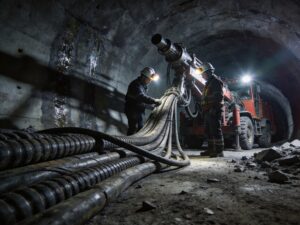
Mechanical considerations include resistance to impact, abrasion, crushing forces, and vibration. Mining operations, manufacturing floors, and material handling facilities demand armored cables or those with reinforced outer jackets. Cable routing should minimize exposure to moving equipment, sharp corners, and potential physical damage.
Underground installations require moisture-resistant construction, often featuring metallic armor or water-blocking elements. Submersible pump cables for water treatment facilities must withstand continuous moisture exposure while maintaining flexibility at various temperatures.
Conductor Material Selection
Copper remains the preferred conductor material for most industrial applications due to its superior conductivity, thermal resistance, and mechanical strength. Copper cables handle higher current densities in smaller cross-sections and offer better corrosion resistance in harsh environments.
Aluminum conductors provide a cost-effective alternative for specific applications. Modern aluminum alloy conductors (such as AA-8000 series alloys) address historical reliability concerns through improved material properties. Aluminum cables are increasingly popular for large-power distribution in commercial buildings and utility infrastructure where weight reduction offers installation advantages.
The choice between copper and aluminum affects not only cable cost but also termination hardware, connection methods, and long-term maintenance requirements. Joint compounds and appropriate lugs are essential for aluminum conductor installations to prevent galvanic corrosion and ensure reliable connections.
Compliance and Certification Requirements
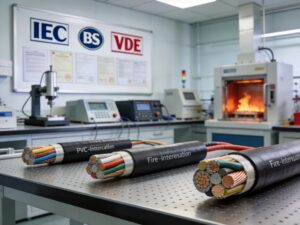
Industrial projects increasingly require cables meeting recognized international standards. IEC (International Electrotechnical Commission) standards provide the global framework for cable construction and testing, while regional standards like BS (British Standards), VDE (German Standards), and UL (North American Standards) address specific market requirements.
Third-party certifications—CCC (China Compulsory Certification), CE marking, and independent laboratory testing—verify that cables meet specified performance criteria. For hazardous locations, certifications like ATEX or IECEx ensure cables can operate safely in explosive atmospheres without igniting flammable gases or dusts.
Specifying certified cables protects project stakeholders from liability while ensuring consistent quality across international supply chains. Working with manufacturers experienced in export certification simplifies compliance documentation and reduces project delays.
Conclusion
Choosing the right power cable for industrial projects requires balancing technical performance, environmental resilience, and cost efficiency. Understanding voltage ratings, calculating current-carrying capacity, accounting for installation conditions, and verifying compliance certifications ensures reliable power distribution that serves facilities reliably for decades.
Partnering with experienced cable manufacturers who offer comprehensive product ranges and technical support helps procurement teams navigate complex selection decisions while maintaining project timelines and budget targets.
Jinyi Cable Co., Ltd. specializes in manufacturing industrial power cables meeting international standards including IEC, BS, VDE, and GB. Our technical team supports international buyers in selecting optimal cable solutions for demanding applications.